BlastProof: David's Shield™, Explained Without the Hype
David's Shield is marketed as a digital preparedness program built around household resilience, off-grid readiness, and faith-based stewardship. Here's what it actually covers, who it may suit, and what it doesn't promise — written as an independent guide, not a sales script.
On This Page
- What David's Shield Is
- Why Household Preparedness Matters
- Core Preparedness Pillars
- What the Program Is Designed to Cover
- Program & Bonus Resource Overview
- A Faith-Based Perspective on Preparedness
- A Practical Household Resilience Framework
- Benefits and Possible Use Cases
- Who This May Be For (and Who It May Not)
- Strengths and Limitations
- How to Evaluate the Offer Before Buying
- Frequently Asked Questions
What Is BlastProof: David's Shield?
Short Answer
David's Shield is marketed as a digital preparedness program that combines household resilience planning, off-grid readiness concepts, and faith-based stewardship themes. It is presented as a set of guides and companion resources intended to help a household think through prolonged power outages, infrastructure disruptions, and other long-duration emergencies.
The name draws on the biblical account of David — a figure associated in scripture with courage, preparation, and reliance on conviction rather than raw force when facing a larger threat. The product uses that story as a framing device for its own subject matter: getting a household's practical and mental footing in order before a disruption occurs, rather than during one.
It's important to be precise about what that means in practice. The program is educational and planning-oriented. According to the product materials, it walks through topics like emergency water and food planning, basic backup-power thinking, household security awareness, and a mindset section built around faith and stewardship. It is not a piece of hardware, not a certified safety device, and not a substitute for professional emergency services, medical care, or licensed security consultation.
Why Household Preparedness Matters
Most households never experience a multi-week grid outage or a severe regional disruption — but shorter versions of these events are common: storms that knock out power for days, water-main breaks, supply disruptions, or a bad winter week that empties store shelves. Preparedness planning isn't about predicting a specific disaster. It's about reducing the number of decisions you have to make under stress, because you already made them in advance.
That's the useful core of any preparedness resource, David's Shield included: a written plan, a checklist, and a shared understanding among household members of what to do first. The value isn't mystical — it's organizational.
Core Preparedness Pillars
Water & Food Planning
Practical thinking around storage, rotation, and basic purification concepts for extended disruptions.
Power & Grid-Down Concepts
Low-tech and backup-power thinking for households facing extended outages — not a promise of full self-sufficiency.
Household Security Awareness
Lawful, non-violent deterrence, planning, and situational-awareness concepts — not weapon or trap instructions.
Basic Health Preparedness
Educational information on home remedies and supply planning, explicitly not a replacement for medical care.
Resilience Mindset
Structured routines and reflection exercises intended to reduce panic and support clearer decisions under stress.
Faith & Stewardship
Biblical framing around stewardship, provision, and leadership within the household.
What the Program Is Designed to Cover
Based on the publicly available product description, the core program is organized as a series of digital modules that a household can work through at its own pace. The stated focus areas include:
- Foundational preparedness planning — identifying likely local risks and building a household plan around them.
- Water and food storage concepts for extended disruptions, including rotation and shelf-stable planning.
- Grid-down and off-grid thinking, including basic backup-power concepts described in the materials.
- Home security awareness framed around deterrence, observation, and planning rather than confrontation.
- A faith-based mindset section connecting stewardship and calm leadership to practical readiness.
What It Is Not
David's Shield is not a certified EMP-shielding product, not a medical treatment, and not a guarantee of protection against any specific event. Treat every claim in the marketing materials as a description of program content — not as an independently verified outcome.
Program & Bonus Resource Overview
| Resource | Stated Focus | Format |
|---|---|---|
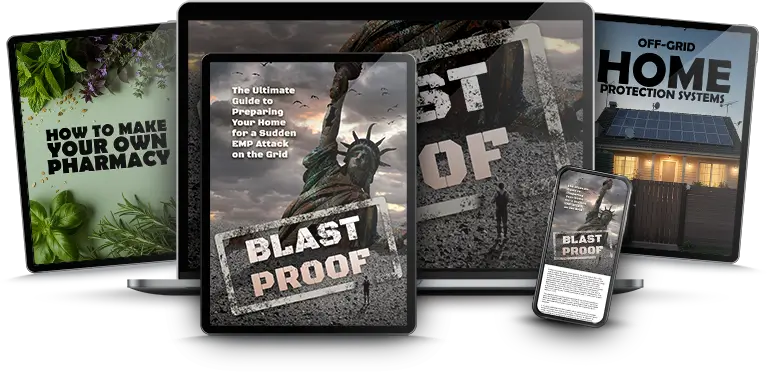
| BlastProof: David's Shield (core program) | Household resilience, grid-down planning, faith-based mindset | Digital modules |
| How to Make Your Own Pharmacy | Educational overview of home remedy and herbal-preparation concepts | Digital guide (bonus) |
| Off-Grid Home Protection Systems | Lawful home-security awareness and deterrence planning | Digital guide (bonus) |
Bonus resource inclusion, pricing, and availability are set by the vendor and may change without notice. Always confirm current contents on the official checkout page before purchasing — see our buyer's guide.
A Faith-Based Perspective on Preparedness
Part of what differentiates David's Shield from a generic survival guide is its explicit framing around faith and stewardship. This isn't unusual in the preparedness space — many households approach readiness as an extension of caring for family, not as a fear-driven response to catastrophe. The biblical concept of stewardship — responsibly managing what you've been given, including your family's safety and provisions — maps naturally onto the practical work of preparedness planning.
Readers should note that this framing is a values lens, not a historical claim. There is no suggestion that the modern product itself existed in any historical or biblical period; it borrows the symbolism of David's story — courage, preparation, and reliance on conviction over panic — as an organizing theme for present-day planning. For more on this distinction, see our page on the symbolism behind the name.
A Practical Household Resilience Framework
Whether or not you use this specific program, a sound household resilience plan generally follows a similar structure. Here is a general framework — informed by common preparedness practice, not exclusive to any single product — that can help you evaluate whether a guide like David's Shield fits your household's needs:
- Assess realistic local risks. Severe weather, grid instability, and supply disruptions look different in Phoenix than in rural Vermont.
- Establish a water and food baseline. Most guidance suggests building toward a multi-day, then multi-week, supply through gradual rotation.
- Plan for power interruption. Identify what in your home truly needs backup power and what can go without it.
- Document a communication and meeting plan. Decide in advance how household members reconnect if separated.
- Review home security basics. Lighting, locks, visibility, and awareness — not confrontation — are the foundation of lawful home protection.
- Revisit the plan regularly. Preparedness is a maintenance habit, not a one-time purchase.
Benefits and Possible Use Cases
Different households pick up a preparedness resource like this for different reasons, and it's worth being specific about where the practical value tends to show up rather than describing it in vague, feel-good terms. Below are the use cases where a structured, digital preparedness guide is most likely to earn its place, based on how programs like this are generally designed to be used.
Getting Organized for the First Time
Many households never sit down and actually write out a preparedness plan — they own a flashlight and some canned goods and call it done. A structured program forces the sequence: assess risks, build a water and food baseline, plan for a power outage, document a communication plan. Having that sequence laid out removes the "where do I even start" friction that keeps most preparedness intentions from turning into action.
Bringing the Whole Household Onto the Same Page
A written plan is only useful if everyone in the household knows it exists. Digital modules that can be shared, revisited, and discussed as a family create a shared reference point — useful for households with kids, aging parents, or anyone who wants preparedness to be a household habit rather than one person's private project.
Households Prone to Regional Disruptions
Areas with a track record of storms, wildfires, extended heat events, or aging grid infrastructure have a more concrete reason to build toward a multi-week planning horizon rather than a bare-minimum 72-hour kit. A program that walks through grid-down and off-grid concepts specifically may be more relevant here than generic disaster-kit checklists.
Readers Who Want a Values-Aligned Approach
Not every household wants preparedness framed around worst-case scenarios and tactical gear. For readers who'd rather approach readiness as an extension of faith, stewardship, and calm family leadership, a program that integrates that framing throughout — rather than bolting a single "mindset" chapter onto an otherwise generic survival guide — may be a better fit than secular alternatives.
Where this kind of resource is less likely to add value: households that already maintain a detailed, tested emergency plan; anyone specifically seeking hands-on tactical or medical certification (which requires in-person, credentialed training no digital guide can substitute for); and readers who want a purely secular resource without any values-based framing. We cover this distinction in more detail in the "who this may not be for" section below.
Who This May Be For — and Who It May Not Be
May Be a Good Fit
- Households wanting a structured starting point for preparedness planning.
- Readers who prefer a faith-integrated approach to readiness content.
- People who want digital, self-paced material rather than in-person courses.
- Anyone looking for a low-cost entry point into household resilience topics.
May Not Be a Good Fit
- Anyone expecting certified, tested, or guaranteed protective equipment.
- Readers seeking licensed medical or security professional guidance.
- People who prefer secular framing without faith-based content.
- Anyone expecting instant results without ongoing practice or review.
Strengths and Limitations
Potential Strengths
Digital delivery means immediate access and the ability to revisit material. The faith-based framing may resonate with readers who want their preparedness planning grounded in values rather than fear. Bundling food, power, security, and mindset topics into one framework can help organize what is otherwise a scattered research process.
Potential Limitations
Like most digital preparedness guides, results depend on the reader actually implementing the material — a guide alone does not build a pantry or a plan. Some topics (medical, security) are necessarily general and should be supplemented with professional resources. Marketing language such as "BlastProof" should be read as branding, not a literal performance claim.
How to Evaluate the Offer Before Buying
Because this is a digital product sold through a third-party checkout, it's worth taking a moment before purchasing to confirm the basics — current price, refund terms, and what's actually included. We cover this in detail in our buyer's guide and our page on how to verify product information. In short:
- Confirm the price shown on the vendor's checkout page — promotional pricing changes over time.
- Read the stated refund or guarantee policy directly from the vendor before purchasing.
- Purchase only through a secure checkout you were directed to from a trusted link.
- Keep your purchase receipt/confirmation email for any refund requests.
Frequently Asked Questions
What is David's Shield?
David's Shield is marketed as a digital preparedness program covering household resilience, grid-down planning, basic home security awareness, and faith-based stewardship themes.
Is this the official David's Shield website?
No. This is an independent publication that explains and reviews the program. See our dedicated page on verifying product information before you buy.
Does the name mean the program makes my home blast-proof or EMP-proof?
No. "BlastProof" is used as branding terminology, not a literal performance claim. See our page on BlastProof branding and EMP preparedness concepts for a fuller explanation.
What's included with the program?
According to the product materials, purchasers receive the core digital program plus two bonus guides. Exact contents and pricing are set by the vendor and should be confirmed at checkout — see our buyer's guide.
Is preparedness content a substitute for professional medical or security advice?
No. Educational preparedness material, including anything discussed on this site or in the program, is not a replacement for professional medical advice, licensed security consultation, or emergency services.
Read the Full Editorial Review
See our complete breakdown of what's included, who it may suit, and the questions worth asking before you buy.