Household Preparedness: A Framework for Grid-Down, Food, Water & Readiness Planning
Before evaluating any specific preparedness product, it helps to understand the broader framework those products are built on. This page walks through the core categories of household readiness planning — grid-down resilience, food and water planning, low-tech communication, and general household readiness — with David's Shield mentioned as one example of a packaged program within that space.
On This Page
What "Layered Preparedness" Means
Short Answer
Layered preparedness is the common practice of building household readiness in stages — short-duration first, then longer horizons — rather than attempting to prepare for every scenario at once. Most credible preparedness guidance, official and independent alike, follows some version of this layered structure.
Search interest around terms like "David Shield" often overlaps with broader questions about household emergency planning generally — how much water to store, what a grid-down scenario actually looks like, and where to start. This page is written to answer those broader questions directly, using David's Shield as one illustrative reference point rather than the sole subject.
The layered approach breaks preparedness into a few recognizable tiers. Early layers focus on short, common disruptions — a multi-day storm outage, a boil-water notice, a supply-chain hiccup at the local grocery store. Later layers address longer, less frequent disruptions. No household needs to reach the outer layers to benefit from preparedness planning; even the first layer meaningfully reduces stress during common short-term events.
Planning Horizons: 72-Hour to Extended
One of the most common organizing tools in preparedness planning is the "planning horizon" — how many days a household is prepared to sustain itself without outside resupply or utility power. The table below summarizes typical tiers referenced across general preparedness guidance.
| Planning Horizon | Typical Focus | Common Starting Point |
|---|---|---|
| 72-Hour (Short-Term) | Immediate needs during the most common outages: water, shelf-stable food, light, basic first aid | A single duffel or bin per household, checked twice a year |
| 2-Week (Intermediate) | Extended outage or supply disruption; broader pantry rotation, backup lighting/power for essentials | Gradual pantry expansion plus a written household plan |
| Extended (1+ Month) | Longer infrastructure strain; more deliberate food/water storage, off-grid power thinking, skill-building | Ongoing rotation systems and ongoing skills practice, not a single purchase |
These tiers are general planning references, not official regulatory standards. Households should adjust based on local risk, climate, medical needs, and household size.
Grid-Down Resilience Concepts
"Grid-down" is shorthand for an extended loss of electric utility service — anything from a multi-day storm outage to broader regional infrastructure strain. Grid-down planning doesn't require assuming the worst-case scenario; it simply means identifying, in advance, which parts of daily household life depend on grid power and what the fallback looks like for each.
- Refrigeration and food safety — knowing how long a closed freezer and fridge stay safe, and having a plan for perishables.
- Lighting — battery or hand-crank options reduce reliance on generators or open flame indoors.
- Heating and cooling — understanding which rooms can be closed off to conserve heat, or which spaces stay cooler without AC.
- Medical devices — households with power-dependent medical equipment should have a documented backup plan, ideally discussed with a healthcare provider in advance.
- Communication — see the dedicated section below, since phone and internet service is often affected alongside grid power.
Backup power options range considerably in cost and complexity, from simple battery banks to generators to more involved solar setups. General preparedness guidance typically recommends starting with the lowest-cost, lowest-complexity options (battery lighting, a manual can opener, a corded phone that doesn't need household power) before considering larger investments.
Food & Water Planning
Food and water planning is usually the first category most households tackle, since it's the most tangible and the easiest to start incrementally. A commonly referenced starting baseline is roughly one gallon of water per person per day, covering drinking and basic hygiene, though actual needs vary with climate, activity level, and health conditions — households with infants, elderly members, or specific medical needs should plan for more.
For food, the general approach favored across most preparedness guidance is to build a rotating stock of shelf-stable items the household already eats, rather than purchasing unfamiliar specialty products that may go unused. "Buy a little extra, rotate it into regular meals, replace what you use" is a simple rule that avoids waste and keeps the stockpile realistic.
Water Planning Basics
Store water in clean, food-grade containers; rotate periodically; know at least one backup purification method (boiling, filtration, or approved tablets) for situations where stored water runs low.
Food Planning Basics
Favor foods your household already eats regularly; track expiration dates; keep a manual can opener and basic cooking method that doesn't require grid power.
Emergency Communication Basics
Communication planning is often overlooked relative to food and water, but it matters just as much during an actual disruption. The basic goal is simple: make sure every household member knows how to reach the others, and where to meet, if normal phone service is unavailable or household members are separated when an event occurs.
- Designate an out-of-area contact that household members can reach even if local lines are congested.
- Write down a physical meeting point in case phones don't work at all.
- Keep a paper copy of important phone numbers — most people no longer memorize numbers stored only in a smartphone.
- Consider a battery or hand-crank radio for receiving official emergency broadcasts when data service is down.
Low-Tech Preparedness Thinking
A recurring theme across most credible preparedness guidance is a preference for low-tech, low-failure-point solutions before more complex ones. A manual can opener doesn't need batteries. A written plan doesn't need an app. A whistle for signaling doesn't need charging. This "low-tech first" thinking isn't a rejection of technology — battery banks, radios, and solar setups all have a place — but it recognizes that the most complex tools are often the first to fail or the hardest to replace mid-disruption.
This principle also keeps preparedness accessible. Building the first layer of a household plan doesn't require a large budget or specialized gear; it mostly requires time, a written plan, and a gradual approach to building supplies. That accessibility is part of why preparedness content — including digital guides that package this thinking into a structured format — has broad appeal across different budgets and skill levels.
Practical Planning Steps
Regardless of which specific resources a household uses, a sound preparedness plan tends to follow a similar sequence:
- Identify realistic local risks. Coastal storm exposure, wildfire risk, winter storm frequency, and regional grid reliability all vary widely by location.
- Set an initial planning horizon. Most households reasonably start at 72 hours before considering longer tiers.
- Build water and food reserves gradually. A little extra with each grocery trip adds up faster than most people expect.
- Document a communication and meeting plan. Written down, not just discussed once.
- Review household security basics. Lighting, locks, and visibility — lawful deterrence and awareness, not confrontation.
- Revisit and rotate. Preparedness is maintenance, not a single purchase or a one-time checklist.
Where Packaged Programs Fit In
Given how broad this framework is, it's easy to see why packaged digital programs exist: they bundle several of these categories — food and water planning, grid-down thinking, household security awareness, and sometimes a values or mindset component — into a single organized resource, rather than requiring a household to research each category separately across dozens of scattered sources.
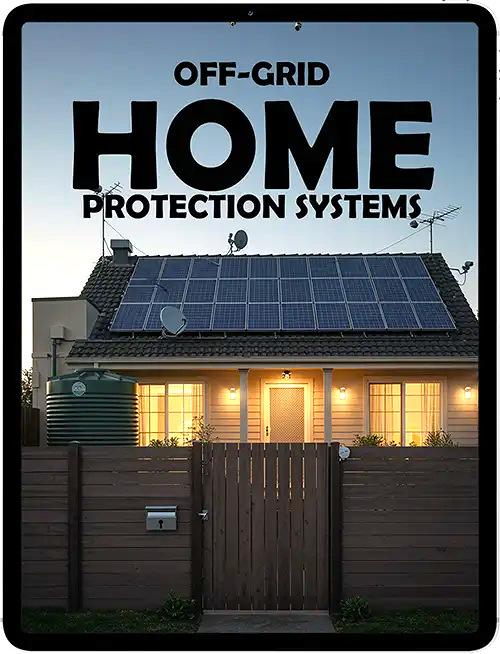
David's Shield is one example of this kind of packaged program. According to its product materials, it organizes household resilience planning, off-grid and grid-down concepts, basic food and water guidance, lawful home-security awareness, and a faith-based mindset section into a set of self-paced digital modules. It sits within the broader framework described on this page rather than replacing it — the underlying planning principles (layered horizons, low-tech first, gradual building) apply whether or not a household uses any particular packaged guide. For a closer look specifically at that program, see our page on what David's Shield actually is, our full editorial review, or our notes on the "BlastProof" branding and EMP-related concepts it references.
A Note on Medical Content
Any health, first-aid, or home-remedy information referenced within a preparedness framework — including in packaged programs like David's Shield — is educational only and not a substitute for professional medical advice, diagnosis, treatment, or emergency medical services.
Frequently Asked Questions
What does "grid-down" preparedness actually mean?
Grid-down preparedness refers to planning for an extended loss of electric utility power — from a severe storm to broader infrastructure strain — and identifying which household needs still function without it.
How much emergency water should a household store?
General preparedness guidance commonly suggests roughly one gallon per person per day as a starting baseline, scaled up toward a household's chosen planning horizon, though needs vary by climate, household size, and health factors.
Is a 72-hour kit enough preparedness planning?
A 72-hour kit is a reasonable minimum starting point for short-duration disruptions, but many preparedness frameworks recommend building gradually toward a two-week horizon and beyond for households in areas prone to longer disruptions.
Where does a program like David's Shield fit into this framework?
David's Shield is one example of a packaged digital program that organizes several of these planning categories — food, water, grid-down thinking, and household security awareness — into a single self-paced set of guides. See our explainer page for details.
Do I need special equipment to start preparedness planning?
No. Most foundational preparedness steps — writing a plan, rotating pantry stock, storing tap water in clean containers — require no special equipment. Equipment becomes more relevant only as a household moves toward longer planning horizons.
See What David's Shield Includes
Read our plain-language explainer or the full editorial review before deciding whether it fits your household's preparedness plan.