What "BlastProof" Really Means — and How to Think About EMP & Grid-Down Preparedness
"BlastProof" is a brand name attached to David's Shield™, not a laboratory-tested performance rating. This page explains, in plain language, why that word is used, what an EMP actually is, and how realistic grid-down planning differs from fear-based survivalist marketing.
On This Page
Why "BlastProof" Is Used as a Brand Name
Short Answer
"BlastProof" is marketing terminology chosen for the product's name — it is not a certified, tested, or independently verified performance claim. No consumer digital guide, checklist, or downloadable program can make a physical home literally blast-proof or EMP-proof. Readers should treat the word the same way they'd treat any evocative product name: as branding, not as an engineering specification.
Product names in the preparedness and survival space frequently lean on dramatic, attention-grabbing language — "bulletproof," "bunker-grade," "indestructible," and similar terms show up across the industry. This is a naming convention, not a technical standard. There is no regulatory body that certifies a digital information product as "blast-proof," and no downloadable guide can physically alter a home's construction, wiring, or shielding on its own.
That distinction matters because it's easy for a catchy name to imply more than the product delivers. According to the product materials, David's Shield is a set of digital guides covering household resilience planning — not a construction service, not a hardware installation, and not a certified shielding product. Any practical hardening work (electrical shielding, structural reinforcement, backup power installation) would be a separate, physical undertaking involving licensed professionals, not something a digital guide performs for you.
We think it's worth naming this plainly, up front, because a reader arriving at a page called "BlastProof David's Shield" deserves an honest answer before anything else: the name is a marketing choice, and the actual content is educational planning material. For a broader look at what the program says it covers, see our overview of what David's Shield is.
What an EMP Is, in General Terms
An electromagnetic pulse, or EMP, is a short, intense burst of electromagnetic energy. In general educational terms, an EMP can — under certain conditions — induce electrical currents in wiring and unshielded electronics strong enough to disrupt or damage them. EMPs are discussed in two broad categories:
- Naturally occurring events, such as severe geomagnetic storms caused by solar activity, which can affect large-scale electrical grids and satellite systems.
- Man-made sources, which are a subject of national-level defense and infrastructure policy discussions rather than household-level consumer concerns.
This page is not a technical or scientific authority on EMP physics, and it does not make claims about the probability, severity, or specific effects of any EMP scenario. That kind of analysis belongs to government agencies, utility regulators, and physicists — not to a preparedness blog or a digital product listing. What we can say plainly is this: no household-level digital guide can shield a home's electrical grid connection from a large-scale EMP event. If a product's marketing implies otherwise, that claim should be treated with skepticism.
A Word on Certified Claims
Genuine EMP shielding (for critical infrastructure or sensitive electronics) is a specialized engineering discipline involving Faraday-cage principles, grounding, and tested enclosures. It is not something a consumer accomplishes by reading a digital guide, and this site does not provide — and would not provide — instructions for attempting DIY EMP shielding as a safety guarantee.
Grid-Down Planning Is Bigger Than EMP
Here's the more useful framing for most households: an EMP is one, relatively rare, potential cause of a grid-down event — but it's far from the most likely one. The reasons households actually lose power for extended periods are usually much more mundane:
Severe Weather
Ice storms, hurricanes, and high-wind events routinely knock out regional power for days at a time.
Aging Infrastructure
Equipment failures and overloaded systems can cause localized or rolling outages, especially during peak demand.
Cascading Grid Issues
A single regional failure can ripple outward, affecting areas far from the original point of disruption.
This is exactly why we think "EMP preparedness" is best understood as a subset of a broader category: general grid-down and infrastructure-disruption resilience. If your household plan only accounts for the single, dramatic EMP scenario, it will still leave you well-prepared for the outages you're statistically far more likely to face — a multi-day storm outage, a heat-wave brownout, or a regional grid event with an entirely ordinary cause. Preparing for "loss of power and services, for reasons unknown" is more useful than preparing for one specific headline-grabbing cause.
Practical Preparation vs. Fear-Based Panic
The preparedness space has a well-earned reputation for leaning on fear. Countdown-style urgency, worst-case scenario language, and dramatic branding are common because they get attention — but they don't necessarily produce better-prepared households. There's a meaningful difference between the two approaches:
Practical Preparation
- Focuses on likely, ordinary disruptions first (storms, outages, supply gaps).
- Builds gradually — a few extra supplies each week, not a panic-buy spree.
- Treats a written plan as a living document, reviewed and updated over time.
- Separates marketing language from verified fact.
Fear-Based Panic
- Leans on worst-case, low-probability scenarios to create urgency.
- Encourages one-time, high-pressure purchases rather than steady habits.
- Uses dramatic branding ("bulletproof," "blast-proof") as if it were a certified claim.
- Discourages calm evaluation by implying time is about to run out.
Our view is straightforward: a household that quietly builds a two-week water and food buffer, knows how to keep essentials powered during a multi-day outage, and has a simple communication plan is meaningfully better prepared than a household that bought a product with dramatic branding but never opened it. The name on the box matters far less than the follow-through.
Why Layered Household Resilience Matters
One of the more useful ideas in general preparedness thinking — one that shows up across serious emergency-management guidance, not just in any single product — is the concept of layered resilience. Instead of relying on one silver-bullet fix, a resilient household stacks several overlapping backups for each essential need, so that if one layer fails, another can cover the gap.
- Water: stored water, a basic filtration method, and knowledge of nearby backup sources — not just one five-gallon jug.
- Light & communication: flashlights, a battery or hand-crank radio, and a family meeting-point plan, rather than relying solely on phone batteries.
- Power for essentials: a tiered approach — what absolutely needs backup power, what can run on batteries, and what can simply go without for a few days.
- Food: a rotating shelf-stable supply plus basic no-cook options, rather than a single bulk purchase that never gets used or rotated.
- Documentation: physical copies of key documents and a written plan, since digital-only records can become inaccessible during an outage.
This layered approach is the opposite of a single-product mindset. No individual guide, kit, or gadget — regardless of its name — is a complete resilience plan on its own. It's one input among several that a household should combine with its own research, local knowledge, and, where relevant, professional guidance.
Where David's Shield Fits Into This Picture
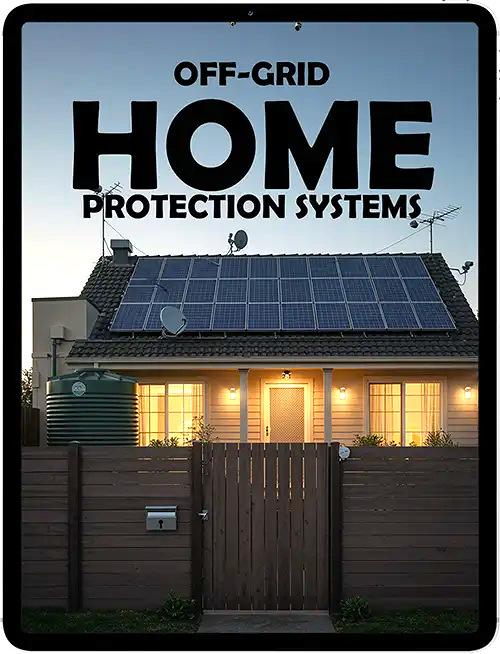
Given all of the above, how should a reader think about a digital program that uses "BlastProof" in its name? According to the product materials, David's Shield is positioned as an entry point into household resilience planning — organizing topics like water and food planning, basic backup-power thinking, and household security awareness into a structured, self-paced format. It is reasonable to treat it as one input into a layered plan, alongside your own local research and, where needed, professional advice — not as a stand-alone guarantee tied to its name.
For a broader walk-through of what the program says it includes, see our preparedness framework overview, or read our full editorial review for a more complete assessment of strengths and limitations.
A Grounded Starting Checklist
If you're evaluating any preparedness resource — this one included — this short checklist can help you separate substance from hype:
- Does the marketing distinguish between branding language and tested, certified claims?
- Does the material prioritize common, likely disruptions alongside rarer scenarios?
- Does it encourage gradual, sustainable habits rather than one-time panic purchases?
- Does it avoid dangerous or illegal instructions (weapon-building, booby traps, etc.)?
- Does it acknowledge its own limitations rather than promising guaranteed outcomes?
Before purchasing anything, it's also worth confirming current pricing and refund terms directly on the vendor's checkout page — our buyer's guide walks through that process step by step.
Frequently Asked Questions
Does "BlastProof" mean the guide makes my home literally blast-proof?
No. "BlastProof" is a brand name used for the digital program, not a certified engineering or performance claim. No consumer digital guide can make a physical home immune to blasts, explosions, or electromagnetic pulses, and readers should treat the word as marketing terminology rather than a tested guarantee.
What is an EMP in simple terms?
An electromagnetic pulse (EMP) is a burst of electromagnetic energy that can, under certain conditions, disrupt or damage unshielded electronic equipment. EMPs can originate from natural sources such as severe solar activity or from man-made sources. This page discusses the concept only in general educational terms, and is not a technical or scientific authority on EMP physics.
Is EMP preparedness the only reason to plan for a grid-down event?
No. Grid-down conditions are far more commonly caused by severe weather, aging infrastructure, equipment failure, or cascading regional outages than by an EMP. A sound resilience plan addresses the loss of power and services generally, regardless of the specific cause.
Can a digital guide guarantee my home will survive a disaster?
No responsible preparedness resource can make that guarantee. Digital guides, including David's Shield, are educational planning tools. Outcomes during an actual emergency depend on many factors outside any guide's control.
What does "layered" household resilience mean?
Layered resilience means building several overlapping backups for critical needs — water, food, light, communication, and power — rather than relying on a single product or single point of failure. If one layer fails, another can cover the gap. See our full program review for how this applies to household planning generally.
Read the Complete Editorial Review
See our full breakdown of what David's Shield covers, who it may suit, and what to check before you buy.